In recent years, with the upgrading of the automotive consumer market structure and the deepening of consumers' car usage concepts, the car floor mat industry is undergoing a transformation from a single protective function to a diversified and high-quality direction. Its development trajectory not only reflects the evolutionary logic of the automotive aftermarket accessories but also embodies the deep integration of new material applications, intelligent manufacturing, and sustainable development concepts. Analyzing current industry trends, it is foreseeable that future floor mat products will see significant breakthroughs in customization, environmental friendliness, intelligence, and functional integration.
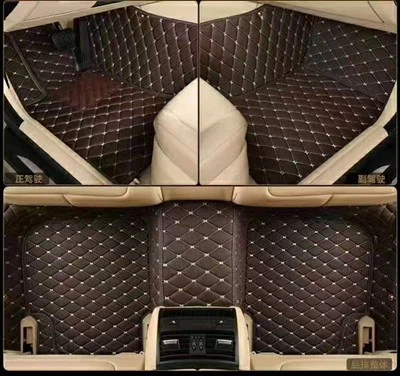
Firstly, customization and precise vehicle model adaptation will become the mainstream direction. As consumers place greater emphasis on the personalization and safety of their in-car spaces, the market share of universal floor mats is gradually being replaced by vehicle-specific products. Relying on digital scanning and precise mold-making technology, manufacturers can provide floor mat solutions that perfectly match the original car floor for different brands and models. This not only ensures more complete coverage but also achieves a seamless fit in terms of pedal avoidance and fixing clip matching, thereby eliminating safety hazards caused by floor mat displacement during driving. In the future, this trend will be further refined to seat layout, drive system, and even personalized color and texture options for car owners, forming a customized ecosystem of "a thousand faces for a thousand people."
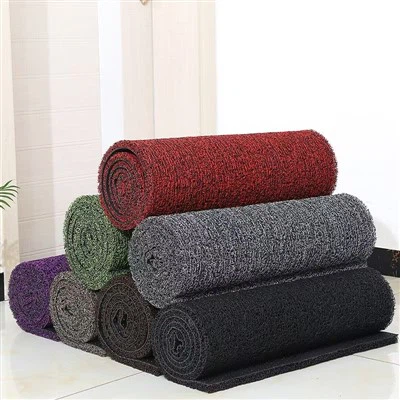
Secondly, the application of environmentally friendly and green materials is rapidly becoming more widespread. Driven by the concepts of healthy driving and low-carbon development, low-volatile, odorless, and recyclable environmentally friendly materials have become a focus of research and development. TPE, food-grade silicone, and natural fiber composite materials, due to their excellent weather resistance, easy recyclability, and harmlessness to the human body, are gradually replacing traditional PVC and inferior rubber. At the same time, the production process emphasizes energy conservation, emission reduction, and clean processes, reducing waste gas and wastewater emissions and improving resource utilization efficiency. It is foreseeable that environmental certification will become an important threshold for corporate competition and a key reference for consumers when making purchases.
Thirdly, functional integration and intelligent exploration are beginning to emerge. In addition to traditional waterproof, dustproof, and anti-slip functions, the new generation of floor mats is extending towards a multi-functional platform. For example, antibacterial coatings are added to the surface to combat bacterial growth in humid environments; pressure sensors or temperature and humidity monitoring elements are embedded in the bottom layer to link with the vehicle's system and provide real-time feedback on the in-car environment; and even heating or cooling modules are incorporated to provide foot comfort adjustments in winter or hot weather. Although such smart floor mats are still in their early stages, the direction they represent indicates that floor mats will no longer be merely passive protective components, but will become an integral part of the intelligent in-car ecosystem.
Furthermore, upgrades in manufacturing and service models are driving industry quality and efficiency improvements. The introduction of automated cutting, robotic sewing, and intelligent warehousing and logistics makes large-scale customized production possible, shortening delivery cycles and ensuring consistent precision. The O2O service model, combining online virtual fitting with offline experience, is also improving user purchasing efficiency and satisfaction. After-sales service is increasingly focused on recycling and trade-ins, extending the product's entire lifecycle value.
Overall, the automotive floor mat industry is showing a development pattern characterized by deepening customization, environmental protection as a driving force, intelligent expansion, and service model innovation in parallel. Driven by both the upgrading of consumer demand and the iteration of technology, the industry will move from traditional manufacturing to high technology and high added value, providing car owners with safer, healthier and more personalized in-vehicle protection solutions, and injecting new impetus into the sustainable growth of the aftermarket.