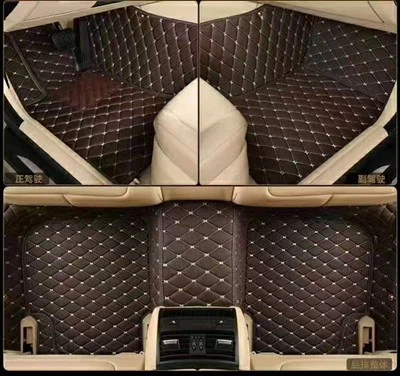
Car floor mat design is not simply about shaping a form, but a systematic engineering project encompassing multiple goals such as protection, safety, comfort, and adaptability.Its principles are deeply rooted in a comprehensive analysis of the vehicle's interior space structure, environmental characteristics, and occupant behavior patterns. Through the coordinated optimization of material selection, structural layout, and installation methods, it achieves a unity of function and aesthetics.
The core design principle is the effective protection of the original car carpet. The floor mats must completely cover the main foot areas of the driver's and passenger's compartments, forming a physical barrier to prevent mud, water, oil, and other contaminants brought in by shoes from directly eroding the original carpet fibers or seeping into the floor gaps. This requires precisely replicating the contour curves of the vehicle's floor in the design, including the undulations and grooves of key areas such as seat rails, the center console, and the perimeter of pedals, ensuring a seamless fit between the floor mats and the floor, eliminating blind spots.
The integration of safety performance is paramount in this design principle. The position and shape of the driver's side floor mat must strictly avoid the movement trajectories of the accelerator, brake, and clutch pedals; any possible interference will significantly increase driving risks. Therefore, designers must determine the maximum coverage boundary and minimum clearance standard of the floor mat based on the pedal spacing, travel, and distribution of mounting points on the base plate for different vehicle models. Simultaneously, through a combination of anti-slip textures, raised dot arrays, or fixing clips and anti-slip studs on the bottom surface, the floor mat's displacement during vehicle acceleration, deceleration, turning, or bumps is suppressed, ensuring it remains stable and does not interfere with the linearity and sensitivity of pedal operation.
Ergonomic considerations are integrated into material selection and surface treatment. The coarseness of the surface texture, the length of the pile, or the softness and hardness of the rubber directly affects foot comfort and noise reduction during walking. For example, the porous structure of fabric floor mats can absorb some of the impact and noise from footsteps, improving quietness; while designs with massage raised dots can alleviate foot fatigue during long drives. Furthermore, edge rolling or covering processes not only enhance the overall aesthetics but also prevent dirt from seeping into the base plate from the sides.
Environmental adaptability and durability design must anticipate extreme usage scenarios. For rainy areas, waterproof and breathable TPE or rubber materials are used, along with a quick-draining channel design to accelerate liquid drainage. For dusty environments, the surface anti-fouling coating and easy-to-clean properties are enhanced. The structural design includes a reasonable thickness allowance to prevent deformation or loss of anti-slip performance due to long-term pressure. Modular splicing or flexible edging adapts to slight deformation of the base plate caused by temperature changes in different seasons.
Environmental protection and health principles are also incorporated into the modern design system. Environmentally friendly materials with low volatile organic compounds (VOCs) are selected, and the production process is optimized to reduce odor residue, ensuring that the air quality inside the vehicle is not affected in high-temperature environments. The introduction of surface antibacterial treatment technology further inhibits bacterial growth and maintains a hygienic environment inside the vehicle.
In summary, the design principle of car floor mats is based on precise fit, with protective function as a prerequisite and safety as the core. It integrates ergonomics, environmental adaptability, and environmental protection concepts, and through the integrated application of multidisciplinary knowledge, ultimately constructs an in-vehicle protection system that meets practical needs and enhances the driving and riding experience. This systematic approach ensures that the foot pads can reliably perform multiple functions even under complex usage conditions.