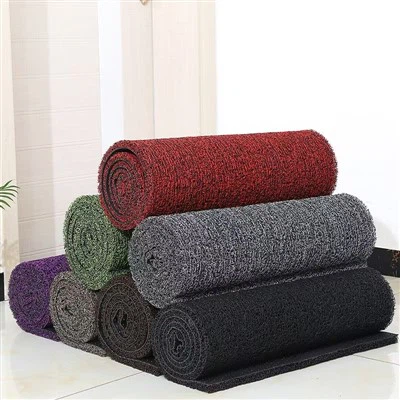
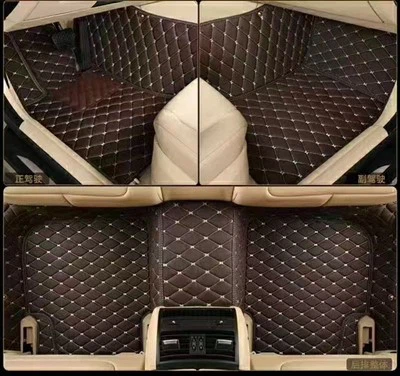
In recent years, demand in the automotive interior materials market has seen steady growth. Xuenisi rolls, thanks to their structural stability and ease of cutting and processing, have become one of the mainstream base materials in the floor mat manufacturing industry. Many material manufacturers are continuously optimizing roll production processes and refining their product specification systems to meet the diverse production needs of downstream floor mat processors. Shandong Kaina stands out as a material supplier focused on the R&D and production of Xuenisi rolls.
Xuenisi rolls belong to the category of PVC loop pile materials. Formed through multiple processes including extrusion, winding, and heat setting of PVC raw materials, they feature a three-dimensional loop structure on the surface. This structure provides excellent dirt-trapping capabilities; debris can be concealed within the gaps of the loops after stepping, making surface cleaning simple. This makes them well-suited for floor mat applications in both passenger and commercial vehicles. The roll format allows downstream manufacturers to cut materials independently according to order dimensions, offering an advantage in production flexibility compared to finished floor mats.
Shandong Kaina has continuously adjusted raw material ratios and molding processes for its Xuenisi rolls. In the raw material stage, the company controls the anti-aging properties of the base material to reduce the probability of hardening or fading after long-term use. During the production phase, parameters for the heat-setting process are optimized to enhance the bonding strength of the loop structure, minimizing fiber shedding. The products are available in various loop heights and density specifications. Rolls with different parameters offer distinctions in foot feel, load-bearing capacity, and material cost, facilitating selection for downstream customers based on their specific needs.
In terms of production control, the enterprise has established a routine sampling inspection mechanism, conducting tests on indicators such as tensile strength, abrasion resistance, and low-temperature toughness to stabilize quality consistency across batches. Additionally, the company provides roll slitting services, capable of slitting rolls to customer-specified widths. This reduces material waste in downstream processing stages and improves processing efficiency.
As end-market attention toward the environmental friendliness and durability of interior materials increases, the Xuenisi roll industry is undergoing continuous iteration. The production side is gradually adjusting additive systems to reduce material odor, meeting relevant requirements for interior materials. Relying on its specification reserves and supporting processing capabilities for Xuenisi rolls, Shandong Kaina caters to the supply needs of small and medium-sized floor mat manufacturers, continuously improving its supply chain delivery capabilities.
Industry observations indicate that competition in the Xuenisi roll market focuses on quality stability, specification variety, and delivery timeliness. Only by continuously refining production processes and detailing quality control procedures can material manufacturers better adapt to the long-term procurement needs of downstream manufacturing. Looking ahead, with the continuous updating and iteration of automotive interiors, Xuenisi rolls are expected to see further optimization directions in material formulation and structural design.