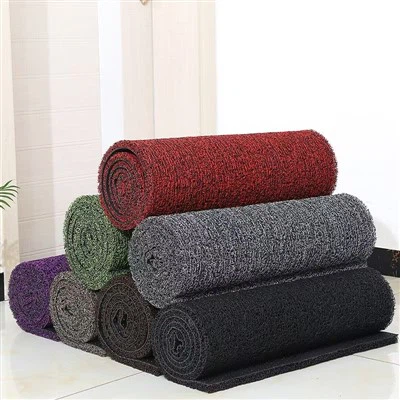
As domestic sand and gold mining industries continuously shift toward green and high-efficiency development, the shortcomings of traditional mineral processing consumables have gradually come to light. Physically adsorptive mineral processing materials are embracing broad market prospects. Gold catching grass has gained rapid popularity thanks to its outstanding trapping capacity for fine gold particles and has become a standard material used at various mineral processing sites. At a recent industry technical seminar, multiple mineral processing engineers reached a consensus on tailings resource recovery. Upgrading supporting consumables for chutes is the most direct and effective way to cut precious metal loss, making high-performance gold catching grass see a new round of market boom.
For a long time, traditional chutes can only intercept large gold nuggets. Flaky gold and ultra-fine gold particles easily flow into tailings along with ore slurry, leading to massive waste of gold resources. Besides, many old consumables have poor wear resistance. Their structures get damaged after long-term scouring by sand and gravel, resulting in rapid decline in adsorption capacity and higher mining costs. Modified with high polymer materials, gold catching grass successfully solves these two major industry challenges.
Made of high-density tufted polyethylene fiber, gold catching grass forms a multi-layer three-dimensional interception net with dense upright filaments. When gold-bearing ore slurry flows through the chute, sand and impurities pass smoothly, while tiny gold grains get firmly trapped in fiber gaps. The whole sorting process relies purely on physical effects without any chemical additives, fully complying with the environmental regulations for green mining.
Field test data proves that premium gold catching grass triples the capture rate of micron-sized fine gold compared with ordinary filter screens and raises the overall gold recovery rate by roughly 10%. This drastically reduces precious metal residue in tailings. In addition, gold catching grass boasts strong corrosion resistance and scouring resistance. It can work continuously for a long time in high-sediment and acid-base ore slurry environments, with a service life five times longer than common gold sticky materials. It can maintain stable adsorption performance even after repeated cleaning, cutting consumable replacement frequency and lowering operational costs for mining projects.
Moreover, gold catching grass can be customized into modular sizes to fit different chutes. Laying and material collection operations are simple, greatly lowering the threshold for mineral processing. It is suitable for large-scale mining areas as well as small mobile mineral processing operations. Industry insiders predict that under the dual guidance of resource conservation and strict environmental policies, refined tailings recovery will become mainstream in this sector. Demand for gold catching grass featuring high adsorption, zero pollution and long service life will keep rising steadily. Manufacturers will keep upgrading fiber coating technology to enhance its ability to trap micro gold, helping the whole mineral processing industry improve quality and efficiency.