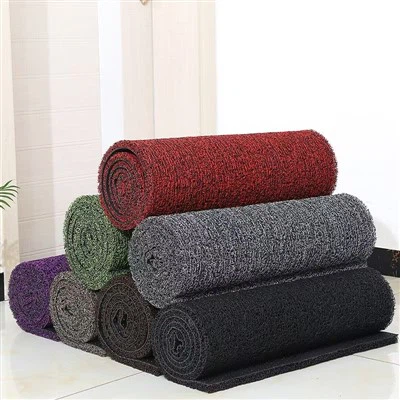
In placer gold enrichment operations, the choice of material for gold panning blankets is a core factor determining their sorting performance, service life, and adaptability. The material not only affects the mechanical properties and chemical stability of the blanket surface but also directly relates to the gold particle capture efficiency and reliable operation under complex conditions. Therefore, scientific material selection based on the operating environment and ore characteristics is a prerequisite for achieving stable enrichment results.
The main materials of gold panning blankets are primarily divided into two categories: fibers and auxiliary reinforcing materials. Fibers bear the responsibility of directly contacting the slurry and capturing gold particles. Their basic requirements include high strength, excellent abrasion resistance, corrosion resistance, and dimensional stability in aquatic environments. Currently, commonly used synthetic fibers include polyester, polypropylene, and modified polyamide. These materials have moderate density, good toughness, and a certain degree of resistance to acidic and alkaline water and ultraviolet radiation, making them suitable for long-term exposure in river or open-air environments. Natural fibers such as high-quality jute and sisal can be used in certain low-abrasion mining operations, exhibiting good initial gripping properties, but their corrosion resistance and lifespan are generally inferior to synthetic fibers.
For highly abrasive mining operations or conditions containing sharp particles, single fibers often fail to meet durability requirements. In such cases, composite fibers or surface treatment technologies must be introduced. For example, applying abrasion-resistant coatings or performing heat setting on the fiber surface can significantly improve friction and aging resistance, delaying lint shedding and structural loosening. Furthermore, some formulations incorporate small amounts of conductive or antistatic fibers to reduce sediment adhesion to the carpet surface and improve washing and recovery efficiency.
Besides fibers, the materials used for support and fixing components also affect overall performance. The frame should ideally be made of corrosion-resistant metal profiles or high-strength engineering plastics. The former offers superior load-bearing capacity and is suitable for large or fixed deployments, while the latter is lightweight, easy to move, and suitable for frequent disassembly and reassembly in field operations. Connectors and tensioners must possess both strength and rust resistance, commonly using stainless steel or galvanized carbon steel to prevent structural instability or uneven stress on the carpet surface due to corrosion.
Material selection must be comprehensively evaluated based on actual working conditions: in waters with high mud content and weak alkalinity, alkali-resistant synthetic fibers and corrosion-resistant frames should be prioritized; in cold regions, low-temperature toughness and resistance to brittle fracture are crucial; for tidal or lake environments requiring long-term immersion, hydrolysis resistance and mildew prevention are essential. If necessary, small-scale tests can be conducted to compare the capture rate and wear rate of different material combinations to determine the optimal configuration.
In general, the selection of materials for gold panning carpets should prioritize meeting the requirements of the separation mechanism, while also considering mechanical properties, environmental adaptability, and economy. Only by accurately matching materials according to ore characteristics and operating conditions can the carpet surface maintain a stable pile structure and high capture efficiency during long-term use, thus providing a reliable material basis for placer gold enrichment operations.