As a basic protective component of car interiors, car floor mats are classified primarily based on two dimensions: material characteristics and structural form. Different categories of products exhibit significant differences in functionality, applicable scenarios, and user experience, collectively forming a segmented market that meets diverse needs.
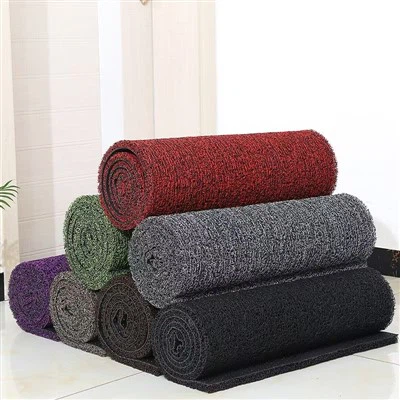
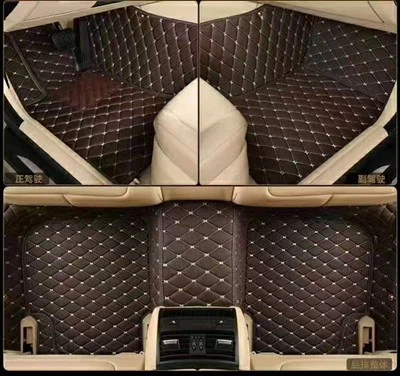
From a material perspective, mainstream types include TPE floor mats, PVC floor mats, loop floor mats, leather floor mats, and blended composite floor mats. TPE floor mats use thermoplastic elastomers as raw materials, possessing characteristics such as being environmentally friendly and odorless, resistant to high and low temperatures, and waterproof and stain-resistant. Their smooth surface is easy to clean, making them suitable for use in areas with high hygiene requirements or humid climates. PVC floor mats have lower costs and excellent waterproof performance, but they tend to harden in low-temperature environments and have a harder feel, commonly found in economy cars. Loop floor mats use a base flocking process; the three-dimensional pile can absorb mud and sand from shoe soles, and daily cleaning can be completed by shaking or rinsing, making them suitable for dusty roads or users who value the convenience of "hiding dirt and grime." Leather floor mats are primarily made of imitation leather or a composite of genuine leather, offering a delicate texture and enhancing the cabin's luxury. They often feature a wear-resistant coating, balancing aesthetics and durability, and are commonly used in mid-to-high-end vehicles. Blended composite floor mats combine the advantages of multiple materials, such as a TPE base with a silk loop surface, or leather edging combined with a PVC waterproof core, expanding their application scenarios through complementary functions.
Based on structural form, floor mats can be divided into universal floor mats and vehicle-specific floor mats. The latter are further subdivided into semi-enclosed and fully enclosed types. Universal floor mats use a flat or simple edging design, fitting most vehicle models, but due to a lack of precise contour matching, they are prone to slippage or incomplete coverage, and are mostly used for temporary replacements or in scenarios where a perfect fit is not critical. Custom-designed car floor mats are molded based on 3D data of the car model, perfectly matching the floor's curvature and the height of the mounting points. Semi-enclosed mats cover the driver and passenger areas, leaving part of the original carpet exposed; installation is convenient but the protection range is limited. Full-enclosed mats extend under the seat tracks, with edges covering the inside of the door panels, forming 360° protection. While installation is slightly more complex, they maximize the prevention of mud and sand penetration, making them the mainstream choice in the current market.
Furthermore, based on functional emphasis, special categories such as anti-slip reinforced mats and noise-reducing mats have emerged. The former improves driving stability by adding anti-slip studs or suction cups, while the latter adds sound-absorbing cotton to the base layer to reduce footstep noise transmission.
The classification logic of car floor mats is essentially an external manifestation of functional needs and scenario adaptation. Consumers can find matching solutions among diverse categories based on car model, usage environment, and core requirements, while the industry's refined classification also drives product performance to continuously evolve towards specialization and customization.