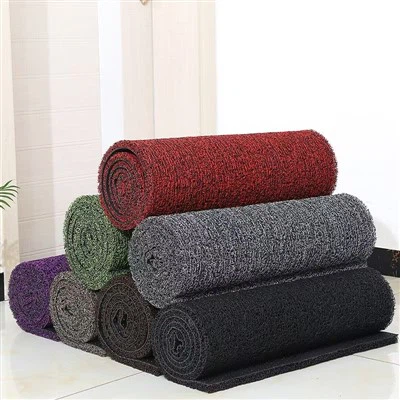
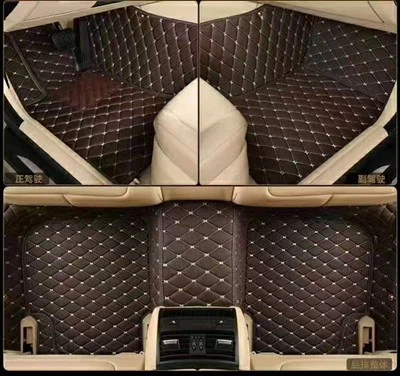
Due to their unique structural characteristics and functional advantages, loop car floor mats have established a relatively clear application scope in the automotive aftermarket. Their applicable boundaries are influenced by environmental conditions, vehicle model structure, usage scenarios, and user needs. Examining these scopes from multiple dimensions helps to more accurately determine whether they fit specific driving situations.
In terms of environmental adaptability, loop car floor mats are particularly suitable for dusty, muddy, and non-extremely damp road conditions. The gaps formed by the three-dimensional pile effectively trap fine sand, dust, and debris brought in by shoes, reducing their penetration into the original car carpet. This is particularly effective for commuting to construction sites, rural roads, suburban driving, or the windy and dusty spring and autumn seasons in northern regions. In areas with frequent rain and snow, loop car floor mats can handle standing water and mud thanks to their quick-drying properties. However, it is necessary to increase the frequency of drying in continuously damp or high-humidity environments to prevent moisture retention at the base of the pile, which can lead to mold growth. In contrast, in coastal cities with consistently high temperatures and humidity and little dust, or in scenarios like food delivery where liquids are frequently spilled, the liquid barrier properties of coil floor mats are not as good as those of sealed materials, thus limiting their applicability.
Regarding vehicle type coverage, coil floor mats, thanks to their custom-molded technology, can fit various body structures, from compact sedans and SUVs to MPVs. Full-coverage models extend the side wings and rear edges to achieve complete coverage of the floor, seat tracks, and door sills, suitable for vehicles with a large interior space or multiple seats. Semi-coverage models focus on the front driver and passenger areas, with a simple structure and easy installation, often used in hatchbacks or for users who prioritize quick replacement. Differences in floor curvature and fixing points across different vehicle models necessitate precise matching of the mat's base; otherwise, the fit, stability, and protective effect will be compromised.
In terms of usage scenarios, coil floor mats are more suitable for individual or family vehicles where ease of cleaning and comfortable foot feel are paramount. Its dust-absorbing and washable properties reduce the difficulty of daily maintenance, making it suitable for environments with children, the elderly, and people with allergies. For commercial vehicles or users who frequently drive long distances, the cushioning and quick dust removal also help improve comfort during long journeys. However, in special-purpose vehicles that require extreme waterproofing or can withstand large amounts of liquid spills, the limitations of its open structure must be weighed.
Furthermore, in terms of aesthetics and interior coordination, the neutral tones and textured patterns of loop floor mats can blend into most cabin styles. However, for environments that pursue a highly unified and luxurious feel, or for customized needs that require strict adherence to specific interior color schemes, their applicability still needs to be considered in conjunction with the overall design.
Overall, loop floor mats are suitable for dusty, sandy, and frequently cleaned road environments, are compatible with a variety of mainstream vehicle models, and have a clear advantage in personal and family car use scenarios. Clearly defining the boundaries of their environment, vehicle model, scenario, and aesthetics can help users more reasonably assess their suitability, thereby maximizing their value.