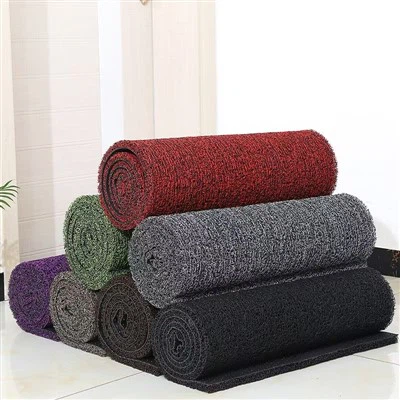
In placer gold enrichment practices, complex operating environments, diverse ore characteristics, and uncertainties in equipment operating conditions often pose challenges to the stable operation and efficient sorting of gold panning blankets. To address these common problems, a scientific and operable solution has been developed, which not only improves gold recovery rates but also significantly extends equipment lifespan and reduces overall costs.
The primary challenge is adapting the ore to the operating conditions. Different mining areas exhibit significant differences in slurry particle size distribution, mud content, and gold particle morphology, making it difficult to directly apply uniform laying and parameter settings. The solution emphasizes conducting small-scale trials in the early stages to determine ore density, particle size distribution, and viscosity characteristics, thereby identifying suitable blanket pile length and density, slurry concentration range, and water flow velocity thresholds. Simultaneously, the support frame structure and inclination range are flexibly adjusted according to site topography and water system conditions, ensuring ideal settling and rock removal zones are formed on the blanket surface in various alluvial layers or abandoned mine environments.
Secondly, the solution addresses the suppression of sorting efficiency fluctuations. During operation, changes in slurry concentration, sudden high mud content, or abnormal flow velocity can all lead to a decrease in gold particle capture rate or excessive sand and gravel retention. To address this, a segmented layout and multi-stage series configuration can be adopted: the front stage focuses on coarse separation to quickly remove most of the light sand and gravel, while the rear stage enhances the retention capacity for fine-grained and flaky gold. In areas prone to fluctuations, buffer flow stabilization devices or adjustable baffles are added to smooth the water flow and ore supply, reducing the damage to the uniformity of the scrubber surface caused by instantaneous impacts. Combined with timed backwashing and online monitoring, local blockages or areas of fiber failure can be detected and addressed promptly.
Furthermore, equipment durability needs to be improved. Long-term exposure to sand and gravel friction and water flow impact can easily cause fiber shedding or fiber fatigue, affecting sorting performance. Solutions include introducing wear-resistant composite fibers or surface abrasion-resistant treatments during the material selection stage, optimizing weaving density and tension control during the forming process, and implementing a periodic inspection and local repair system during use. For high-frequency mobile operations, modular frames and quick-release connections can be used to reduce the pulling damage to the carpet surface during assembly and disassembly.
Furthermore, operational safety and environmental protection requirements must be considered. For sloping or slippery environments, stable working platforms and anti-slip measures should be provided; rinsing wastewater should be properly diverted and settled to prevent secondary loss of fine gold particles and reduce the risk of environmental pollution.
In summary, the gold panning carpet solution is not a collection of single technologies, but a comprehensive strategy encompassing ore characteristic identification, operating parameter optimization, equipment structural reinforcement, and operational process control. Through systematic application, it can maintain efficient and stable enrichment performance in variable environments and provide reliable support for the refined utilization of placer gold resources.